





















From our work
UNICEF
Veilleurs du Web, Youth-Led Digital Fact-Checking and Anti-Misinformation Platform for the Democratic Republic of the Congo
Democratic Republic of the Congo
The audience-asymmetry problem
Misinformation in African digital public spheres spreads on social media platforms whose audiences skew young and whose engagement patterns reward emotional resonance over verification. The institutional response that most governments and multilateral organisations have defaulted to is the top-down communications campaign: a verified message, a paid distribution channel, an analytics dashboard tracking reach. The campaigns are not useless. They reach the audiences that already trust the institutions running them, which is a meaningful subset of the population. They also fail to reach the audiences that distrust those institutions, which in many contexts is the larger subset, and the misinformation actors who target the second group continue to operate without an effective counterweight.
The audience asymmetry is structural rather than contingent. Trust in institutional voices does not transfer through paid amplification. The young audiences whose digital lives unfold on the social platforms are reached by voices they recognise as their own, by accounts whose authors look like them and speak the way they speak. A verified communications message from a government ministry or a UN country office sits in a different cognitive category from a fact-check from a peer of the audience, regardless of how technically accurate the institutional message is. The strategic response that follows from the asymmetry is to invest in the peer voices themselves, training young digital natives to do the fact-checking work, and giving them the institutional infrastructure their reach requires.
What the strategic response actually requires
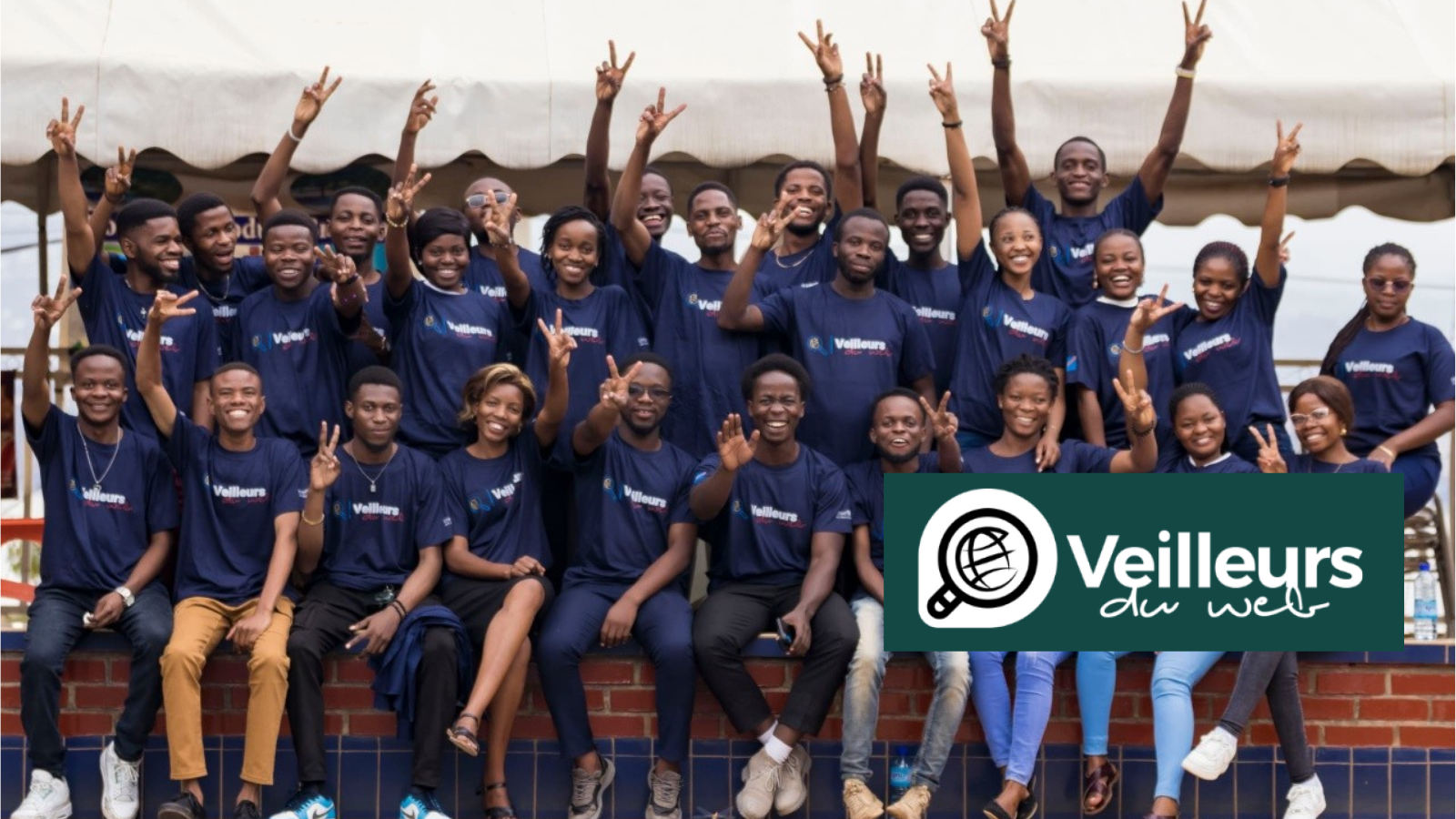
UNICEF DRC made the strategic bet in August 2021 with the launch of the Veilleurs du Web programme. The institutional logic is simple: train young Congolese aged fourteen to twenty-four to be digital sentinels, equip them with the methodological discipline and the verification reflexes the work requires, and amplify their voices rather than substituting institutional voices for them. By 2024 the programme had trained five hundred Veilleurs and recorded more than one hundred thousand online actions countering misinformation, with several Veilleurs operating personal accounts that reach thousands of followers each, on platforms where the programme as an institutional brand would never have built that reach directly.
The institutional architecture that scales this kind of programme is different from the architecture that scales an institutional communications campaign. The programme team needs to train, validate, and govern a population of contributors rather than produce a stream of internally-authored content. The contributors need a workspace that surfaces their personal contribution to themselves and to the programme team. The audience needs a public surface that lets them encounter the verifications, the methodological resources, and the human voices behind the work. The administrative team needs governance tooling that absorbs the complexity of running a five-hundred-person volunteer network across a country the size of the Democratic Republic of the Congo. None of this fits into a generic content management deployment.
What we built for UNICEF DRC
PANEOTECH delivered the Veilleurs du Web platform for UNICEF DRC as the institutional infrastructure that gives the programme the scale it had outgrown. The platform consolidates three distinct surfaces sharing a single content backbone: a public-facing surface for the audiences the Veilleurs reach, a member workspace for the volunteers themselves, and an administrative backend for the programme team. The public surface presents fact-checks, news, methodological resources, events, and the human profiles of the volunteers behind the work. The member workspace gives each Veilleur a personal dashboard, an action submission form, a profile page, and a status-tracked view of the articles they have proposed. The administrative backend covers configuration, account governance, dashboard management, and the editorial workflow that gates publication.
The platform is delivered both as a responsive web application at veilleursduwebrdc.org and as a Trusted Web Activity Android application on Google Play, meeting the audiences and the Veilleurs in the distribution channels they actually use. The build follows UNICEF's Drupal gold repository standards so the platform inherits the institution's ongoing security patching and feature evolution. The discipline is what turns a youth fact-checking programme that had outgrown its tooling into an institutional digital infrastructure capable of operating at the scale the programme has reached.
The institutional lesson
For misinformation response programmes the choice is not between top-down communications campaigns and bottom-up volunteer networks. It is between investing in the institutional infrastructure that lets volunteer networks scale and continuing to fund campaigns that reach the audiences that already trust the institution. Build the platform around the volunteers, transfer the institutional ownership, and the programme earns the kind of reach into distrustful audiences that no campaign can buy.
We build the institutional platforms volunteer networks need to scale.
Three-tier architecture, capacity transfer, and the engineering thinking that youth empowerment work requires.