















Five hundred young fact-checkers, one digital public sphere.
The Democratic Republic of the Congo is in the middle of a digital generational shift. Internet penetration in the country reached twenty-three percent of the population, representing roughly twenty-three million users, and the overwhelming majority of those users are young. The same youth population that drives the country's digital uptake is also the most exposed to the misinformation, the online violence, and the manipulated narratives that spread fastest where institutional fact-checking is thinnest. The structural asymmetry between the supply of misinformation and the supply of verified information is the strategic gap the Veilleurs du Web programme exists to close.
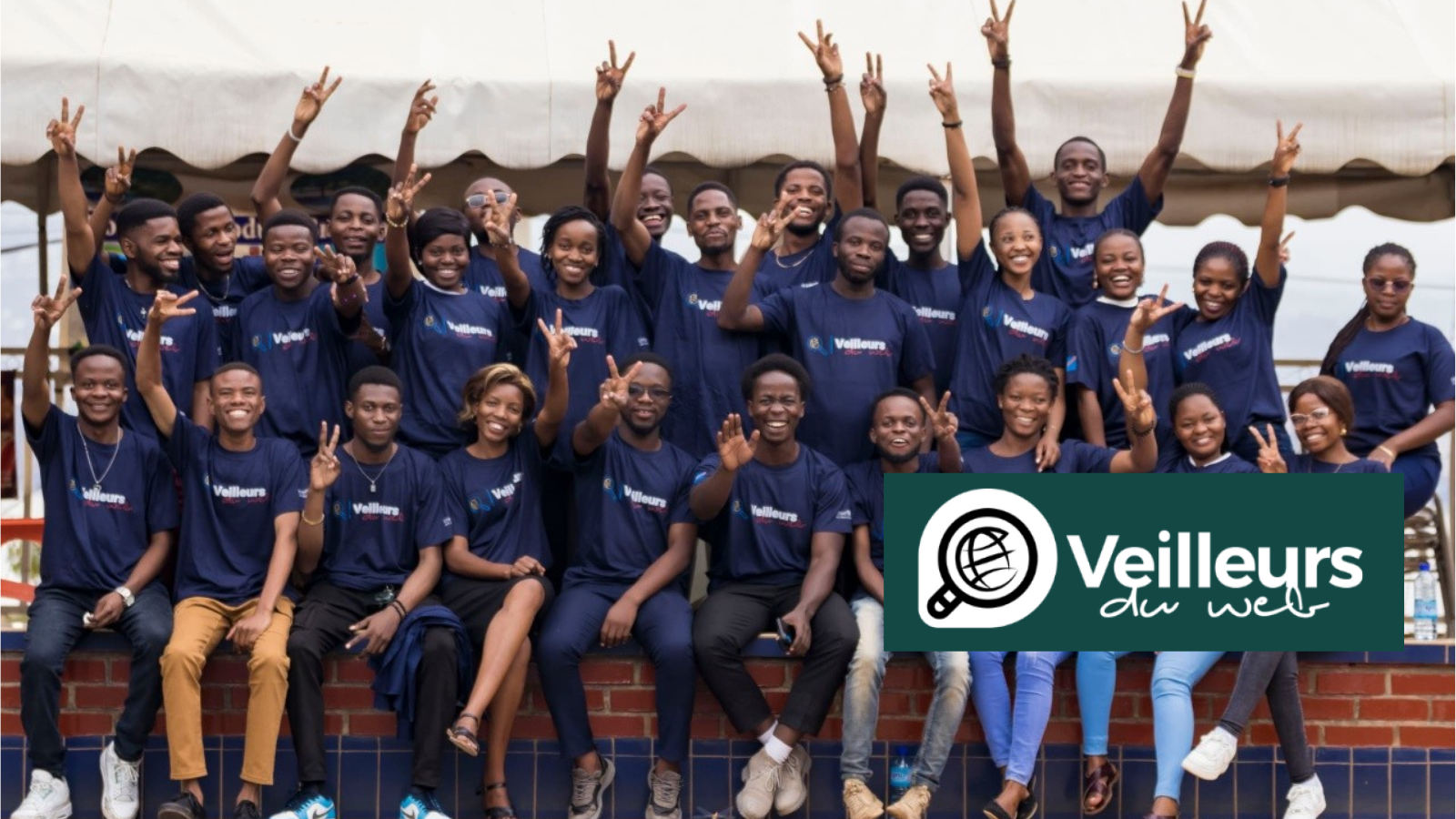
UNICEF DRC launched the Veilleurs du Web programme in August 2021 with a deliberate institutional bet: train young Congolese themselves to be the fact-checkers, the verifiers, and the digital sentinels their generation needs, and they will reach audiences that no top-down communications campaign can reach. Five hundred young people aged fourteen to twenty-four have been trained since the programme launched. They serve as digital ambassadors for child rights and as relays for verified information during the health crises, the humanitarian situations, and the conflict-related episodes that periodically saturate the country's social media spaces with misinformation. By 2024 the programme had recorded more than one hundred thousand online actions countering false information and preventing online violence, with several Veilleurs operating personal accounts that command thousands of followers each.
UNICEF DRC mandated PANEOTECH to design and deliver the digital platform that gives the Veilleurs du Web programme the institutional infrastructure its scale demands. The platform consolidates the public-facing fact-checking publication channel, the private member workspace where Veilleurs report their actions and propose articles, and the administrative backend through which the programme team validates, governs, and amplifies the work. The platform is delivered both as a responsive web application at veilleursduwebrdc.org and as a native Android application on Google Play, meeting the Veilleurs and their audiences in the distribution channels they actually use.
The mandate. Build the digital platform that lets a youth fact-checking programme operate with the institutional discipline its scale requires. Combine public visibility, member productivity, and administrative governance in a single environment, optimise for the connectivity reality of Congolese audiences, and deliver the platform across both web and mobile channels so the Veilleurs and the audiences they serve can reach it on the device they have.
Youth empowerment, media literacy, and child rights advocacy.
The Veilleurs du Web programme stands at the intersection of three institutional priorities that shape UNICEF's work in the Democratic Republic of the Congo. The first is youth empowerment: giving young Congolese the tools, the training, and the platform to participate substantively in the digital public sphere rather than only consume what circulates within it. The second is media literacy: equipping a generation with the analytical reflexes that distinguish verified information from manipulated narratives, and giving them the methodological discipline to do the verification work themselves rather than depend on external fact-checkers. The third is child rights advocacy: positioning young people as visible advocates for the rights of children in their communities, with online violence prevention and child protection content as a core element of what the Veilleurs amplify.
The platform is engineered around these three priorities rather than around a generic content management metaphor. The fact-checking publication workflow respects the methodological standard the Veilleurs are trained to apply, with verifiable sources required for every published verification. The member workspace makes the personal contribution of each Veilleur legible to themselves and to the programme team, surfacing the actions they have taken and the articles they have proposed without flattening their individual presence. The public surface highlights the human voices behind the work, so audiences encounter the Veilleurs as the young people they are rather than as anonymous content producers. The architecture follows the institutional reality of the programme rather than the generic patterns that any content platform could deploy.
A three-tier platform for volunteers, audiences, and programme governance.
The platform is structured around three distinct surfaces sharing a single identity layer and a single content backbone. The public surface serves the audiences the Veilleurs reach. The member workspace serves the Veilleurs themselves. The administrative backend serves the programme team that runs the institutional governance. Each surface optimises for its own users without compromising the others.
Public Fact-Checking Surface
The public surface combines the home page with recent fact-checks and calls to action, the news section with searchable articles, the toolbox with tutorials, infographics, and methodological guides, the events calendar covering panels and webinars, the dedicated fact-checking section presenting the Veilleurs' verification approach, and the Who We Are section profiling the volunteers and the programme's impact dashboard. Counters surface the live tally of trained Veilleurs and the cumulative online actions the programme has registered.
Member Workspace for the Veilleurs
The private member workspace gives each Veilleur a personal dashboard listing the actions they have logged, an activity submission form for reporting new fact-checking actions, a profile page they can curate, and a My Articles area surfacing the verification articles they have proposed and their status in the editorial workflow. The workspace makes individual contribution legible without exposing personal data on the public surface.
Administrative Backend
The programme team operates the platform through the administrative backend, with configuration controls for provinces, thematic areas, activity types, and article validation workflows. Account management covers the contributor, administrator, and Veilleur user types. Dashboard management lets the programme team configure the analytics surfaces they monitor. Content management covers all the public-facing content the platform exposes, from articles to events to tutorials to volunteer profiles.
Faceted and Predictive Search
The search architecture supports both predictive search with autocomplete suggestions and faceted search with filters on relevance, country focus, content type, and thematic area. The combination lets users find the verifications and resources they need whether they know what they are looking for or are exploring the platform for material on a topic. Search works across textual content and uploaded documents.
Analytics and Impact Dashboard
The platform integrates analytics tooling configured per UNICEF DRC's specifications, with dashboards covering the audience metrics that matter to the programme: bounce rate, page views, top referrals, unique users, geographic distribution, and demographic breakdown where available. The Notre Impact section on the public surface presents the programme's headline results in a format the audience and the donor community can consume directly.
Accessibility and Inclusive Design
The platform is engineered to the WCAG 2.0 AA accessibility standard required by UNICEF, with semantic markup, keyboard navigation, screen reader support, alternative text on visual content, and contrast ratios that meet the standard. The design language follows the Veilleurs du Web brand charter while respecting UNICEF's broader visual identity guidelines, with a layout that adapts cleanly from smartphones through tablets to desktop.
The same platform, through the Play Store too.
Web platforms reach a different audience than mobile apps even when the underlying product is the same. Many users in the Democratic Republic of the Congo encounter content through the Play Store rather than through a search engine, and a service that exists only as a web URL stays invisible to that audience regardless of how good it is. The Veilleurs du Web platform is delivered both as a responsive web application at veilleursduwebrdc.org and as a native Android application on Google Play, expanding the platform's reach into the distribution channel a substantial fraction of the audience actually uses.
The mobile application is built as a Trusted Web Activity, the modern Android architecture that wraps the responsive web platform inside a native Android shell. The user installs and launches an app the same way they install and launch any other app from the Play Store. Behind the launch icon, the application loads the same platform that powers the web experience, with the same content, the same authentication, the same fact-checks, and the same member workspace. The architecture means content and feature updates propagate to the mobile audience the moment they ship to the web, without app store re-approval cycles or version fragmentation between the two channels.
The Trusted Web Activity approach is the structurally correct architecture for the Veilleurs du Web programme because the substance of the work is content, not app-specific functionality. The Veilleurs publish articles, the audiences read them, the members report actions, the programme team governs the workflow, all of which are content operations that the web platform handles natively. Wrapping the same content in an Android shell extends the reach without duplicating the engineering, and the discipline preserves the institutional ownership of a single codebase rather than fragmenting it across two parallel implementations.
Engineered for Congolese audiences and Congolese connectivity.
The architectural choices follow directly from the operational reality of a youth fact-checking programme operating in the connectivity, security, and scale conditions of the Democratic Republic of the Congo. Each constraint shapes a specific design decision in the platform.
Drupal foundation aligned with UNICEF's engineering standards
The platform is built on Drupal, the content management system UNICEF maintains as its institutional standard for digital communication platforms. The build aligns with UNICEF's gold repository for Drupal core, the common contributed modules the institution maintains across its country offices, and the custom module patterns that absorb the institution's recurring requirements. The alignment means the platform inherits UNICEF's ongoing security patching, accessibility maintenance, and feature evolution, rather than diverging from it as a one-off custom build would.
Sub-three-second page load on Congolese connectivity
The platform is engineered to a strict performance target: page loads under three seconds on the connectivity profiles Congolese audiences typically operate against. The discipline runs through every layer of the stack. The Drupal implementation is configured for aggressive page caching and database query optimisation. The frontend markup is structured for fast parse and render. The asset pipeline minifies and bundles efficiently. The hosting configuration tunes server parameters for the request profile. The combined effect is a platform that loads quickly even on the constrained connections that exclude the audiences most platforms unintentionally lock out.
Three-tier permissions architecture
The permissions architecture distinguishes three substantive user types: the public audience who reads the published content without authentication, the Veilleurs who log in to their member workspace, and the administrators and contributors who operate the editorial and programme workflows. Each tier has its own access scope, its own interface entry point, and its own workflow patterns. The three-tier architecture is what lets the platform serve substantively different audiences without compromising the experience of any of them.
Editorial workflow for fact-check publication
Articles flow from Veilleur drafts through programme team review to public publication, with status visibility for the Veilleur at every step. The workflow respects the methodological discipline the fact-checking work requires: every article needs verifiable sources, every publication is editorially reviewed, every published verification carries the institutional weight the programme stands behind. The workflow is the institutional substance of the platform, not its decoration.
Security architecture aligned with UNICEF policy
The security architecture follows UNICEF's information security policy and recommendations. SSL transport encryption, secure authentication, role-based access control, audit trails on administrative actions, automated daily backups with seven-day retention, application-level firewalling, DDoS mitigation, and the security patching cadence the institutional context requires. The platform handles content that periodically attracts the attention of the misinformation actors it counters, and the security architecture is calibrated for that operational reality rather than for a benign assumption about the threat environment.
Capacity transfer and operational documentation
The engagement included structured capacity transfer to the UNICEF DRC programme team that operates the platform. Administrator training on configuration, content workflows, user management, and dashboard configuration. Editorial training on the article validation workflow, the activity tracking system, and the public content management. Technical documentation covers the plugin and module inventory, the API integrations, the deployment architecture, and the maintenance procedures. The institution owns the platform operationally with the structural support it needs to evolve the platform as the programme matures.
Built for the digital public sphere of the DRC.
The platform serves the institutional actors and the audience footprint the Veilleurs du Web programme operates against. The five hundred trained Veilleurs use the member workspace to log their actions and propose verification articles. The UNICEF DRC programme team operates the editorial workflow, the user governance, and the dashboard configuration through the administrative backend. The general Congolese public, journalists, and decision-makers consume the published fact-checks, the methodological resources, and the impact reporting through the public surface, on whichever device they prefer to access it. The combined reach extends across the audiences the Democratic Republic of the Congo's digital public sphere actually contains, from urban smartphone users in Kinshasa to the readers in the provincial capitals where the Veilleurs operate.
Joint venture delivery and institutional ownership.
The Veilleurs du Web platform is delivered by PANEOTECH in joint venture with Hope Land Congo, the Kinshasa-based non-governmental organisation working at the intersection of youth empowerment, sustainable development, and good governance in the Democratic Republic of the Congo. Hope Land Congo contributes the in-country institutional anchor, the youth-engagement methodology, and the continuity of presence on the ground in Kinshasa that a youth fact-checking programme of the Veilleurs du Web's scale requires. PANEOTECH leads the architectural design, the Drupal implementation, the responsive web build, the Android application packaging, the editorial workflow engineering, the security configuration, the analytics integration, and the capacity transfer. The work is conducted under UNICEF DRC's technical supervision, with iterative reviews against the Veilleurs du Web brand charter, the UNICEF accessibility standards, the UNICEF SEO standards, and the UNICEF security recommendations. The combination of methodological depth in DRC youth engagement and engineering depth across PANEOTECH's continental engagements is what the joint venture was designed to deliver.
The platform is in production at veilleursduwebrdc.org with the mobile application available on Google Play. UNICEF DRC holds full operational ownership, with capacity transfer delivered alongside the platform itself, and a multi-year support and maintenance engagement carrying the platform through 2027. The architecture preserves the institutional path for the platform to evolve as the Veilleurs du Web programme matures, as new cohorts of fact-checkers are trained, and as the digital public sphere of the Democratic Republic of the Congo continues its rapid expansion.